Engineering the infrastructure of a multi-planetary civilization.
Recoverable near-space platforms. Live mission telemetry. Foundational systems for habitats, propulsion, life support, and in-space industry — flight heritage first, then the stars.
Flight-proven avionics Near-space environmental R&D GPS + chase telemetry FAA Part 101 operations Education & research payloads
Why Atlas
Real hardware today. A credible path to the stars.
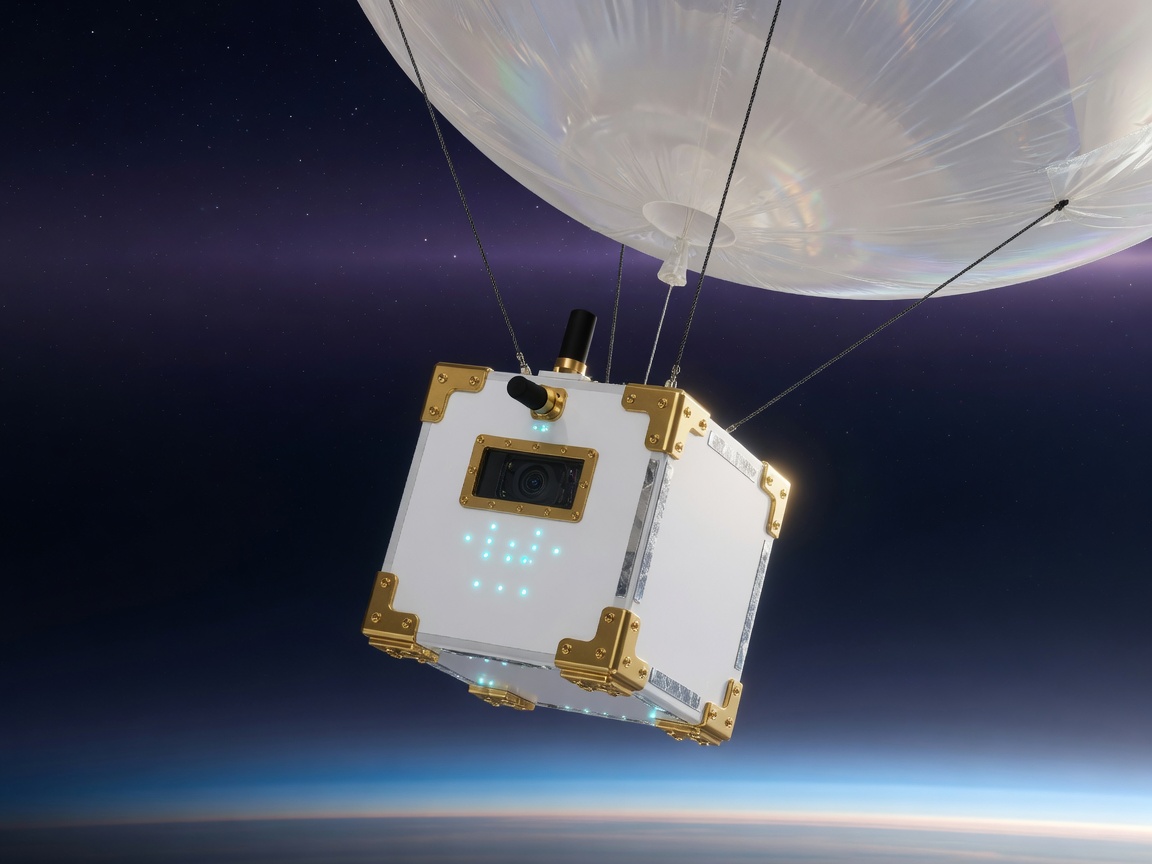
Atlas-Zero delivers recoverable near-space flight with live sensor telemetry, mission tracking, and publication-ready data — the same operational discipline we apply to every system destined for orbit and beyond.
Near-space testbed
Repeatable high-altitude campaigns that stress-test avionics, environmental sensors, and recovery systems in conditions relevant to orbital hardware.
Mission operations
Integrated mission control: live telemetry, chase coordination, GPS track replay, and exportable mission archives built for partners who demand operational rigor.
Hosted payloads
Classroom experiments, research instruments, and partner hardware flown with tracking, recovery, and environmental context data included.
North-star vision
Habitats, propulsion, ISRU, and settlement systems — each near-space flight de-risks the technology ladder toward permanent presence beyond Earth.
Flight profile
From the pad to the edge of space
Drag the payload along the 0–30 km ladder. Atlas-Zero is engineered for the full ascent: cold soak, thin air, live sensing, and recovery.
30 km
20 km
10 km
0 km
Altitude AGL12.0 km
Ascent & chase
Ground teams track GPS and telemetry while the stack climbs through dense air toward the tropopause.
Atlas-Zero stack
Mission architecture
Every node is flight-relevant. Click a subsystem to inspect the ops chain from payload to live cloud telemetry.
Hosted payload
Classroom experiments, research instruments, and partner hardware fly with full tracking, recovery support, and environmental context data.
Institutions, research teams, and industry partners: fly on flight-proven platforms, access mission-grade data, and help de-risk the systems required for permanent presence beyond Earth.
Building the infrastructure of a multi-planetary civilization.
Atlas Dynamics engineers the full technology stack required for durable presence beyond Earth — habitats, propulsion, life support, EVA systems, and in-space industry. Near-space flight heritage is our proving ground; orbital and planetary systems are the destination.
Strategic pillars
Habitats & Colonies
Inflatable modules, 3D-printed regolith structures, radiation shielding, closed-loop life support, and complete settlement systems that keep people alive and productive for years.
Starships & Rockets
Propulsion systems, ascent/descent vehicles, in-space refueling, and the transportation infrastructure that makes the solar system accessible.
Spacesuits & Human Systems
Next-generation EVA suits, medical systems for long-duration flight, psychological support, and human factors engineering for living in space.
Asteroid Mining & ISRU
Resource extraction, propellant production, building materials from in-situ resources, and the industrial base that makes space self-sustaining.
Space Economy Infrastructure
In-space manufacturing, orbital assembly, communications networks, power beaming, and the economic frameworks that turn exploration into industry.
Integrated systems
From precision sensors to settlement-scale modules, Atlas designs, tests, and integrates the complete stack — a long-term partner for governments, research institutions, and industry.
Strategic horizon
Each phase compounds flight-proven engineering — near-space campaigns establish heritage and data products that unlock orbital and planetary programs.
PHASE 0 • NOW
Near-Space Testbed
Recoverable high-altitude platforms as the company proving ground — validated avionics, environmental sensing, hosted payloads, and mission data products at scale.
PHASE 1 • 2-5 YEARS
Orbital Bridge
Suborbital and rideshare pathways. Flight-qualified subsystems. Institutional and commercial programs. Near-space remains the rapid-iteration engine for higher TRL work.
PHASE 2+ • 5-15+ YEARS
Multi-Planetary Presence
Lunar and Martian habitats, ISRU demonstrations, settlement modules, and logistics at scale — the full stack for sustainable presence beyond Earth.
Atlas-Zero is a recoverable high-altitude flight system with live telemetry, dual-environment sensing, GPS mission tracking, and hosted payload capacity — the proving ground where we validate avionics and environmental systems before they graduate to orbit.
Altitude band0–30 km
SensorsDual BME280
NavGPS track
LinkLoRa + cloud
OpsRecoverable
RegulatoryFAA Part 101
Command console
Atlas-Zero sensor stack
Checking…
The near-space platform streams dual BME280 readings (payload + exterior), barometric altitude, derived mission metrics, Pi health snapshots, and scientific publication bundles. Dashboard access is password protected.
Modular configurations for biology, life-support analogs, radiation, power, and materials evaluation — recoverable, instrumented, and mission-documented.
Hosted technology demonstrations
Research institutions and commercial partners fly components in extreme environments — rapid iteration and authentic flight heritage at a fraction of orbital campaign cost.
Data products & partners
Mission archives, environmental datasets, and operational transparency for educators, laboratories, and organizations advancing space capability.
CORPORATE ROADMAP
From near-space to multi-planetary infrastructure
Atlas Dynamics advances capability through a deliberate technology ladder. Each phase establishes flight heritage, data products, and partner readiness for the next domain — from recoverable near-space systems to orbital platforms and planetary settlement infrastructure.
Program stages
PHASE 0 · ACTIVE
Near-space flight systems · Atlas-Zero
Near-Space Flight Heritage
Recoverable high-altitude platforms establish the company’s operational foundation: live telemetry, dual-environment sensing, GPS mission tracking, hosted payloads, and publication-ready mission archives. This phase validates avionics and environmental systems under extreme conditions relevant to higher domains.
Milestone focus: sustained flight operations, mission data products, partner payload capacity, and documented safety standards.
PHASE 1 · 1–4 YEARS
Orbital bridge · Hosted & rideshare programs
Low Earth Orbit & Hosted Systems
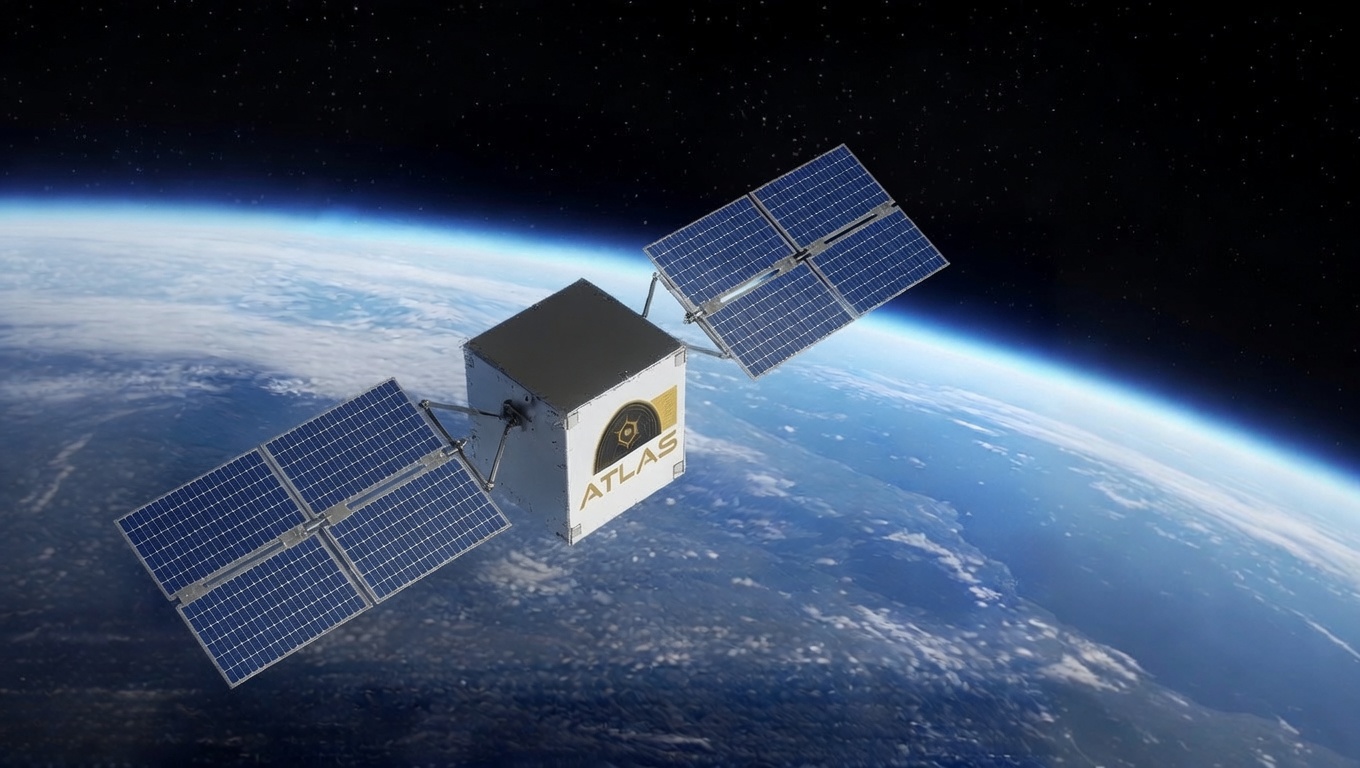
Near-space heritage enables access to suborbital and orbital pathways — rideshares, hosted payload slots, and early flight-qualified subsystems. Commercial and institutional programs expand the Atlas platform as a rapid innovation engine for higher TRL hardware.
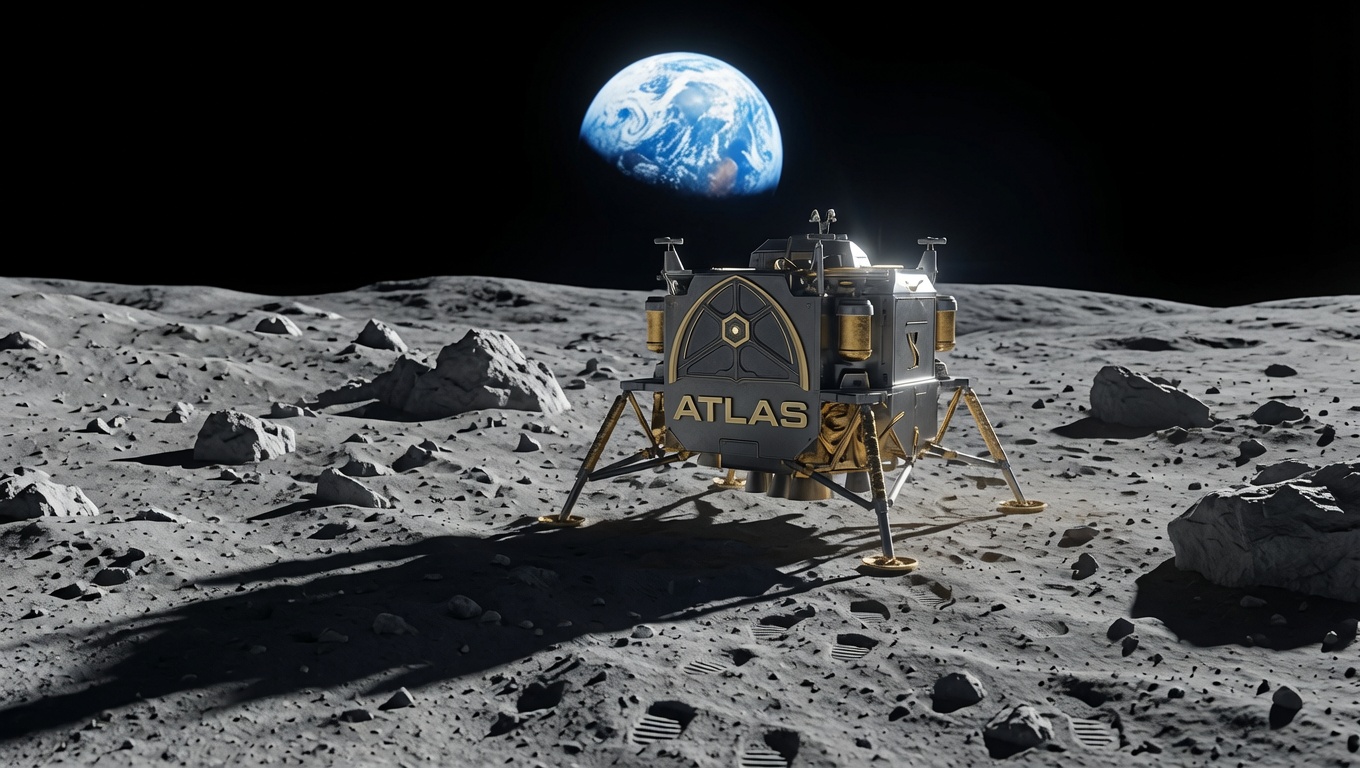
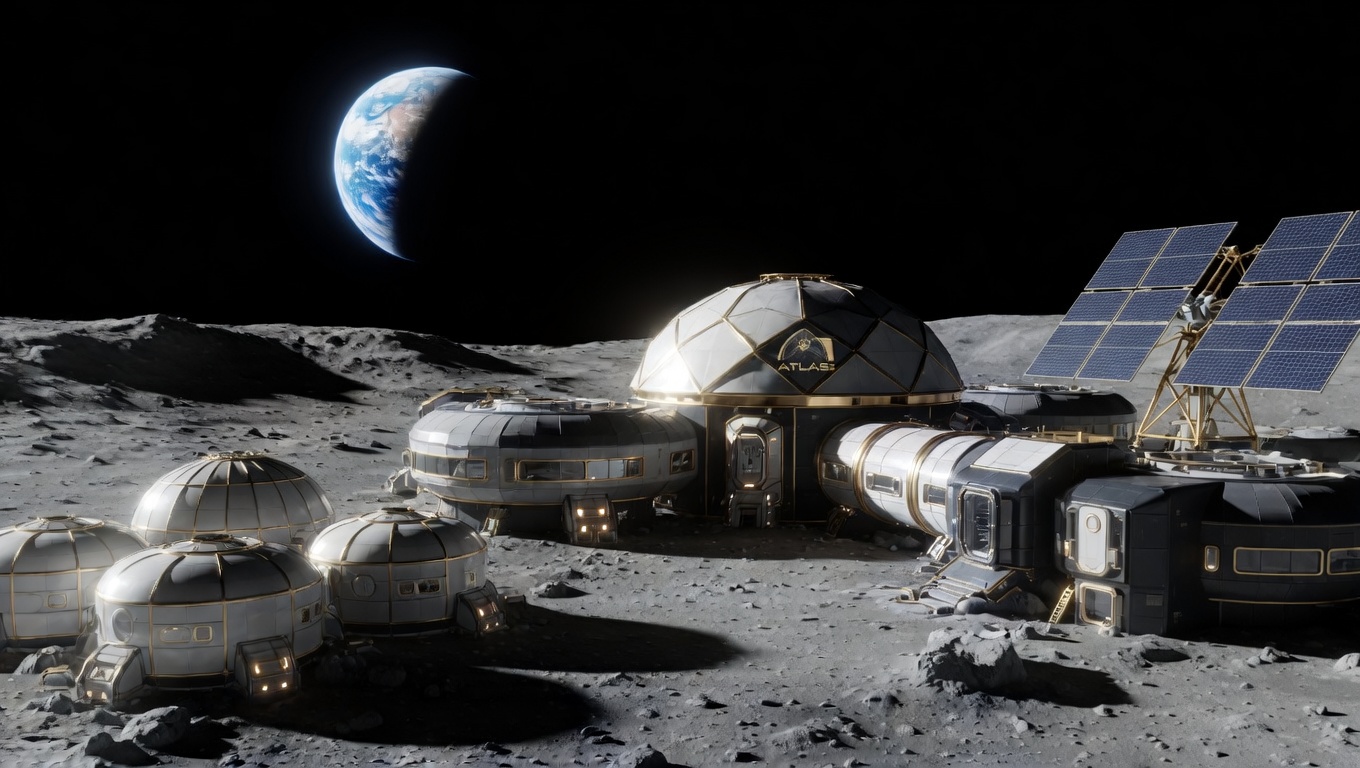
First Atlas systems on the lunar surface — lander or payload demonstrations proving habitats, radiation shielding, environmental control, or ISRU-relevant technologies under authentic extraterrestrial conditions.
Milestone focus: surface-qualified hardware, mission partnerships, and lunar-relevant subsystem heritage.
PHASE 3 · SUSTAINED PRESENCE
Lunar Outpost Infrastructure
Demonstration sites evolve into sustained outpost capability — habitats, power, life support, and recurring operations that form the backbone of permanent lunar infrastructure.
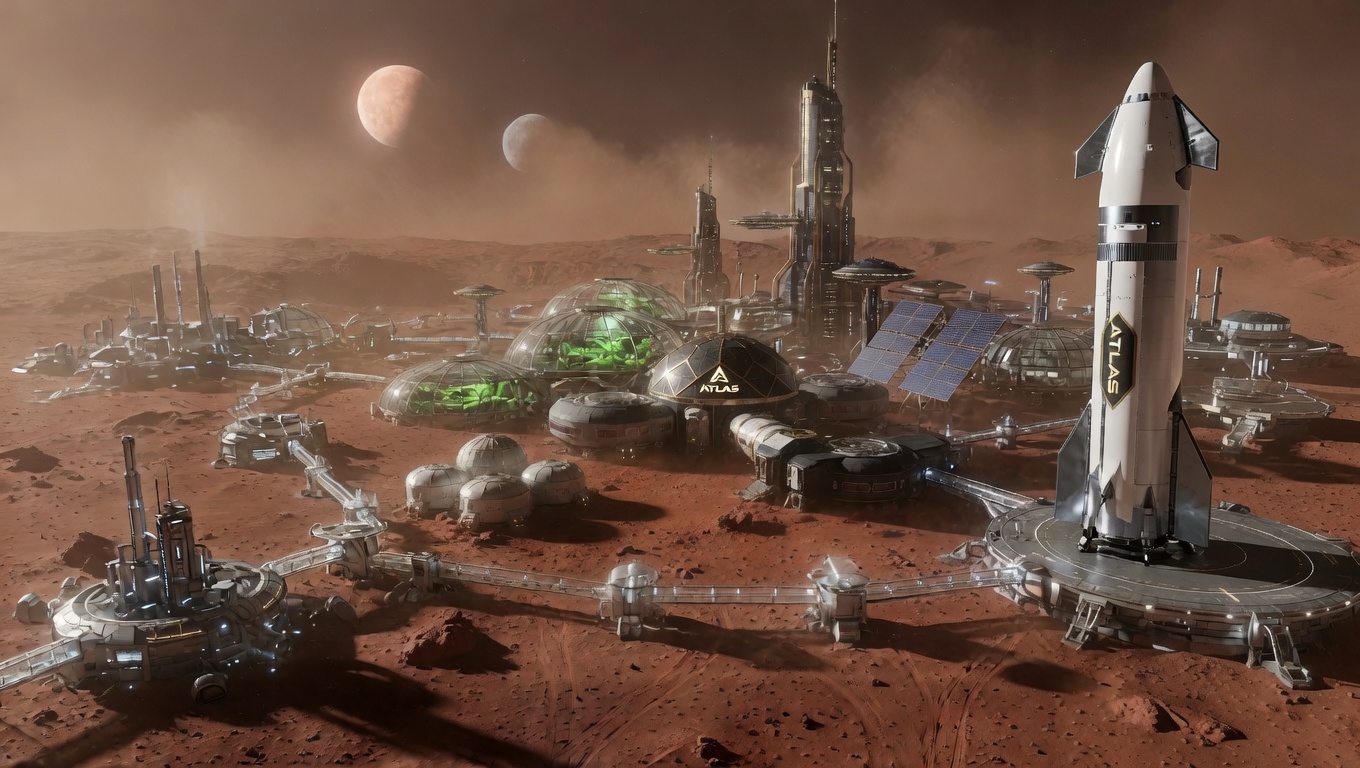
Atlas systems on Mars supporting human-rated infrastructure — ISRU for propellant and construction materials, radiation protection, environmental control, and a permanent planetary foothold.
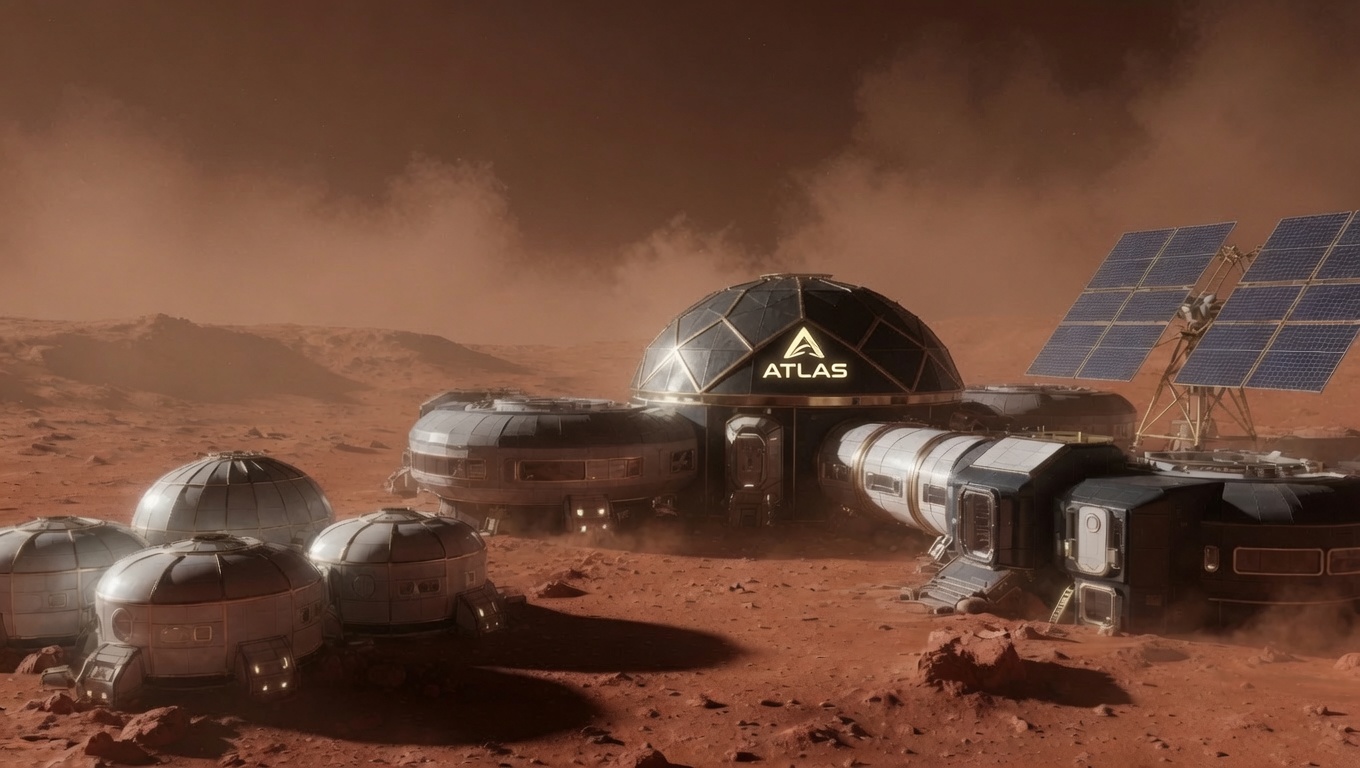
Sustainable settlements with full-stack habitats, in-situ manufacturing, resource utilization, and industrial capacity. Atlas becomes foundational infrastructure for a multi-planetary economy.
Milestone focus: closed-loop systems, industrial base beyond Earth, and continuous multi-domain operations.
Near-space remains the permanent innovation engine. Every Atlas-Zero campaign de-risks architecture for the stages that follow.
OPERATING DOCTRINE
How Atlas builds
The principles and technology pillars that guide Atlas Dynamics — from near-space flight heritage to orbital and planetary systems. A multi-decade program executed with disciplined engineering, transparent data, and recoverable campaign economics.
Jump to section
Program horizon
PHASE 0
Foundation & flight heritage
Near-space campaigns · Atlas-Zero
PHASE 1
Platform scale & partners
Hosted programs · institutional growth
PHASE 2+
Higher TRL & frontier systems
Orbital · lunar · planetary
Core Principles
Full-stack systems thinking + more
Atlas develops the complete capability set: life support, habitats, power, ISRU, radiation protection, health, manufacturing, logistics, and propulsion as an integrated stack.
Sustainable presence requires every domain to work together. Near-space campaigns prove components that transfer to orbital and planetary systems.
Near-space as the proving ground + more
Recoverable high-altitude flight delivers frequent access to extreme environments — the optimal low-risk testbed for systems that must perform on the Moon and Mars.
Near-vacuum, extreme cold, and elevated radiation provide high-fidelity environmental analogs with rapid campaign cadence.
Partners and data as the growth engine + more
Hosted payloads and mission data products build institutional relationships, flight heritage, and transparent archives that strengthen every subsequent phase.
Partners receive mission-grade data and documented flight heritage — de-risking technology while expanding the Atlas network.
Platform revenue funds frontier capability + more
Near-space services and programs fund flight hardware, subsystems, and the long-horizon systems required for settlement-scale infrastructure.
The near-space platform is permanent — remaining the accessible innovation engine as the company advances higher domains.
Ten technology pillars
1. Closed-Loop Life Support (ECLSS)
2. Bioregenerative Food Systems
3. Habitats & Shielding
4. Power & Thermal Systems
5. In-Situ Resource Utilization
6. Radiation Protection
7. Health & Human Factors
8. In-Space Manufacturing
9. Logistics & Propulsion
10. Communications & Autonomy
Internal program phases
Internal checklist (not shown on public navigation). Progress saves locally.
Filter:
Team Level 1 • 0 XP
0 day streak · program momentum
Next level at 100 XP
Badges
Current Focus - Active Quests (max 5)
0/5
Pin tasks to maintain team focus priorities.
PHASE 0 • MONTHS 1-6+
Foundation & flight heritage
Near-space campaigns Atlas-Zero operations
PHASE 1 • MONTHS 7-24
Build Real Momentum & the Platform
Platform scale Partner programs
LEADERSHIP
Atlas Dynamics is led by cofounders who combine engineering, education, and a long-horizon commitment to multi-planetary infrastructure — advancing recoverable flight systems today and the settlement stack for tomorrow.
COFOUNDER
Brandon
Cofounder with a background in education and hands-on systems building. Brandon leads platform development, flight operations architecture, and the engineering path from near-space heritage to higher-domain systems — driven by a lifelong commitment to exploration and human progress beyond Earth.
COFOUNDER
Amy
Cofounder with a background in education and the arts. Amy shapes organizational culture, partner engagement, and the human dimension of the mission — ensuring Atlas advances not only technical capability, but the curiosity and excellence required of the next generation of explorers.
Operating philosophy
Flight-proven systems
Near-space platforms as the permanent testbed — recoverable, frequent, and directly relevant to habitats, life support, and radiation environments.
Operational discipline
Rigorous safety review, documented procedures, and sustainable campaign cadence — engineered to compound over decades.
Capital efficiency
Investment prioritizes flight heritage, mission data, and partner value. Near-space economics that scale into orbital programs.
Technology ladder
Near-space → suborbital → orbital → planetary systems. Each domain funds and de-risks the next.
Today & the horizon
Atlas Dynamics was founded by Brandon and Amy to build the foundations of multi-planetary civilization through real hardware, transparent mission data, and programs institutions can trust. Today the company designs, builds, and operates Atlas-Zero while engaging educators, researchers, and industry partners across the near-space ecosystem.
As flight heritage and platform capability expand, the organization scales deliberately — aligned to the technology ladder from balloons to orbit and beyond.
Institutions, research teams, industry partners, and press — Atlas welcomes inquiries regarding payload programs, collaboration, and platform capability. Every message is reviewed by leadership.
Hosted experiments, research campaigns, and collaborative near-space flight programs.
Partnerships
Universities, laboratories, industry, and organizations advancing space capability.
Media & general
Press, speaking engagements, and questions about Atlas vision and roadmap.
Responses typically within a few business days. For operational standards, see Safety & Compliance.
COMPLIANCE
Safety, operations & FAQ
Operational standards for Atlas near-space missions. Safety, regulatory compliance, and transparent procedures are non-negotiable — for the company, its partners, and every flight conducted.
Frequently Asked Questions
What does Atlas Dynamics do today?
Atlas operates Atlas-Zero — a recoverable near-space flight platform with live telemetry, environmental sensing, GPS tracking, and hosted payload capacity. The long-term mission is the full technology stack for multi-planetary civilization; near-space is where capability is proven first.
What flight vehicles does Atlas use?
High-altitude weather balloons (typically 1500–3000g latex) with parachute recovery, operated within FAA Part 101 parameters (payload under 6 lbs total in standard configurations).
How does Atlas manage recovery and safety?
Every campaign includes trajectory prediction, NOTAM filing where required, chase capability, and redundant tracking (radio, APRS, and visual). Operations use formal go/no-go criteria and avoid dense population centers whenever possible.
Can partners fly payloads with Atlas?
Yes. Hosted payloads are central to the platform. Educators, researchers, and industry partners can fly experiments with full tracking, recovery support, environmental data, and mission archives. Contact Atlas to discuss a program.
What is the business model?
Atlas builds durable value through payload programs, mission services, data products, education partnerships, and research collaboration — with revenue reinvested into flight systems, operations infrastructure, and higher-domain capability.
Safety & regulatory framework
FAA Part 101 (United States)
Atlas operates under applicable unmanned free balloon rules. Standard limits observed include total payload under 6 pounds (2.7 kg), no person or property hazard, and NOTAM filing 24–48 hours in advance when required. Current regulations are verified before each campaign.
Recovery & risk management
Every flight uses a parachute sized for controlled descent, multi-path tracking, chase coordination, and a written recovery plan. Controlled airspace and dense population centers are managed through formal coordination and site selection.
Liability & partner terms
Atlas maintains appropriate liability coverage for experimental aviation operations. Partner payload flights are governed by written terms acknowledging the experimental nature of near-space campaigns.
International operations
Regulatory frameworks vary by jurisdiction. Atlas currently operates within the U.S. regulatory environment; international programs require coordination with the relevant civil aviation authority.
This page is informational and not legal advice. Regulations change. Official sources and qualified counsel should be consulted for operational decisions.
Full safety checklists, NOTAM procedures, and recovery standards are maintained under Atlas operational doctrine and shared with flight partners on request.
Click outside or press ESC to close
Telemetry is offline
The Pi dashboard is not reachable right now. It may be powered down or away from WiFi.
When it is back online, the dashboard is password protected.